


Understanding Normalization in Montessori Education

Normalization in Montessori education is one of Dr. Maria Montessori’s most important and widely misunderstood concepts. It does not refer to intelligence, conformity, or labeling children as “normal” or “abnormal.” Instead, normalization describes a natural developmental process that emerges when children are given the right environment, freedom, and purposeful work. This concept sits at the heart of Montessori philosophy and explains why Montessori classrooms look and function differently from traditional learning environments.
Why Montessori Uses the Term “Normalization
Dr. Maria Montessori developed her educational approach through years of careful observation of children. Like many scholars of her time, she used terminology that can feel outdated today. The word normalization often raises concerns because modern discussions around child development frequently focus on neurodiversity and differences in learning styles.
In Montessori education, normalization has nothing to do with intellect or comparison. Dr. Montessori used the term to emphasize that qualities such as focus, independence, self-discipline, and joy in work are normal and achievable for all children when development is supported appropriately.
Normalization is one of the most profound and essential concepts in Montessori education. It is not a state imposed upon the child, but rather a transformation that unfolds when any child, regardless of intellectual ability, is given the right conditions to grow, explore, and learn freely.

The Meaning of Normalization
When children are placed in an environment that supports their natural development, they spontaneously begin to become calm, focused, engaged, and self-motivated. Dr. Montessori referred to this process as “normalization,” emphasizing that these qualities are inherent in all children, not just a select few. In The Absorbent Mind, she described normalization as “the single most important result of our work.”
The term itself was borrowed from anthropology, where it means becoming a contributing member of
society. In Montessori education, normalization represents the child’s journey toward becoming a balanced, independent, and socially responsible individual.
When children are placed in a developmentally appropriate Montessori environment, they naturally begin to show:
• Deep concentration
• Love of purposeful work
• Self-discipline
• Social harmony
• Inner satisfaction and joy
These traits emerge spontaneously—they are not imposed by adults or enforced through rewards and punishments.
The Process of Normalization
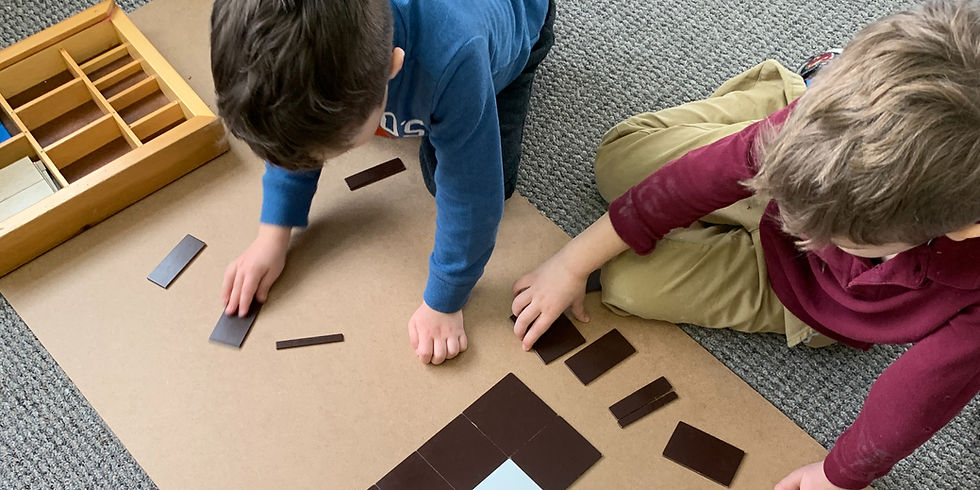
Normalization occurs in the Prepared Environment. This is a carefully designed space that meets the child’s physical, emotional, and cognitive needs. In this environment, the teacher introduces Montessori materials, demonstrates their use, and allows children the freedom to choose their own activities. Through repetition, concentration, and meaningful interaction, children begin to find satisfaction and peace in their work. A normalized child is one who can select an activity independently, focus deeply, complete the task, and return the materials to their proper place. This process nurtures responsibility, order, and respect for the environment and others.
The Four Key Characteristics of Normalization

Dr. Montessori and later educators, identified four main characteristics that signal the process of normalization:
1. Love of Work
Children who are normalized find joy and serenity in purposeful activity. They choose their work freely and engage with it wholeheartedly.
2. Concentration
A hallmark of normalization is the ability to focus deeply on a chosen task. Even in a busy classroom, a normalized child can become completely absorbed in meaningful work.
3. Self-Discipline
Through repetition and engagement, children develop perseverance and the ability to complete their
chosen work from start to finish. This self-discipline arises naturally, not through external control.
4. Sociability (Joyful Work)
Sociability in Montessori education does not mean forced group interaction. It reflects respect for themselves and others, patience, cooperation, and harmonious relationships within the classroom community.
The Role of the Adult and the Environment
Normalization cannot be forced. It happens naturally when children are given meaningful work in an environment that fosters independence. The adult’s role is to prepare and maintain this environment—ensuring it is developmentally appropriate, orderly, beautiful, and filled with activities that engage the child’s senses and intellect. Practical life activities, such as pouring, cleaning, or caring for plants, while seemingly inconsequential, play a crucial role in this process. They help children develop concentration, coordination, and a sense of responsibility—laying the foundation for normalization.

Conclusion
Normalization is the heart of Montessori education. It represents the unfolding of the child’s true nature—calm, focused, joyful, and self-disciplined. When children are given freedom within a structured environment, they naturally grow into independent, compassionate, and capable individuals. As Dr. Montessori observed, normalization is not something done to the child; it is something that happens within the child when development is allowed to proceed naturally.


Comments